Everything You Need to Know About Glycolic Acid Toner Before You Start Using It
Discover how glycolic acid toner works, its benefits, possible side effects, the right way to use it, how often to apply it, what results to expect, and how to build a skincare routine that works for Pakistani skin.
Quick Answer
If you’re wondering whether a glycolic acid toner is right for you, the short answer is yes—for many people it can be an effective addition to a skincare routine when used correctly. Glycolic acid is a chemical exfoliant that removes dead skin cells, improves skin texture, brightens dull-looking skin, and helps reduce the appearance of post-acne marks. Beginners should start by using it 1–2 nights per week, follow with a moisturizer, and wear broad-spectrum sunscreen (SPF 30+) every morning because exfoliated skin is more sensitive to UV exposure.
In This Guide, You’ll Learn
✔ What glycolic acid toner is and how it works
✔ Science-backed skincare benefits
✔ Whether it’s suitable for your skin type
✔ How often you should use it
✔ Common beginner mistakes to avoid
✔ What to expect before and after regular use
✔ Whether it can be combined with Vitamin C or Niacinamide
✔ A simple skincare routine for Pakistan’s climate
✔ Frequently asked questions answered
✔ Tips for getting the best possible results
Is This Guide for You?
This guide is designed for anyone who wants to:
- Reduce dull-looking skin
- Improve uneven skin tone
- Smooth rough skin texture
- Improve the appearance of post-acne marks
- Learn the correct way to use glycolic acid
- Build a beginner-friendly skincare routine
- Avoid common exfoliation mistakes
- Understand which products work well with glycolic acid
Whether you’re completely new to chemical exfoliation or already using glycolic acid and want to improve your routine, this guide will help you make informed decisions.
Why Trust This Guide?
There is a lot of skincare advice online, but not all of it is accurate or suitable for every skin type.
This guide is based on established skincare principles and practical recommendations. Rather than promising overnight transformations, it focuses on helping you understand how glycolic acid works, how to use it safely, and how to build a consistent routine that supports healthier-looking skin over time. Results vary from person to person, but using glycolic acid correctly, moisturizing regularly, and wearing sunscreen are key parts of a balanced routine.
Recommended Product
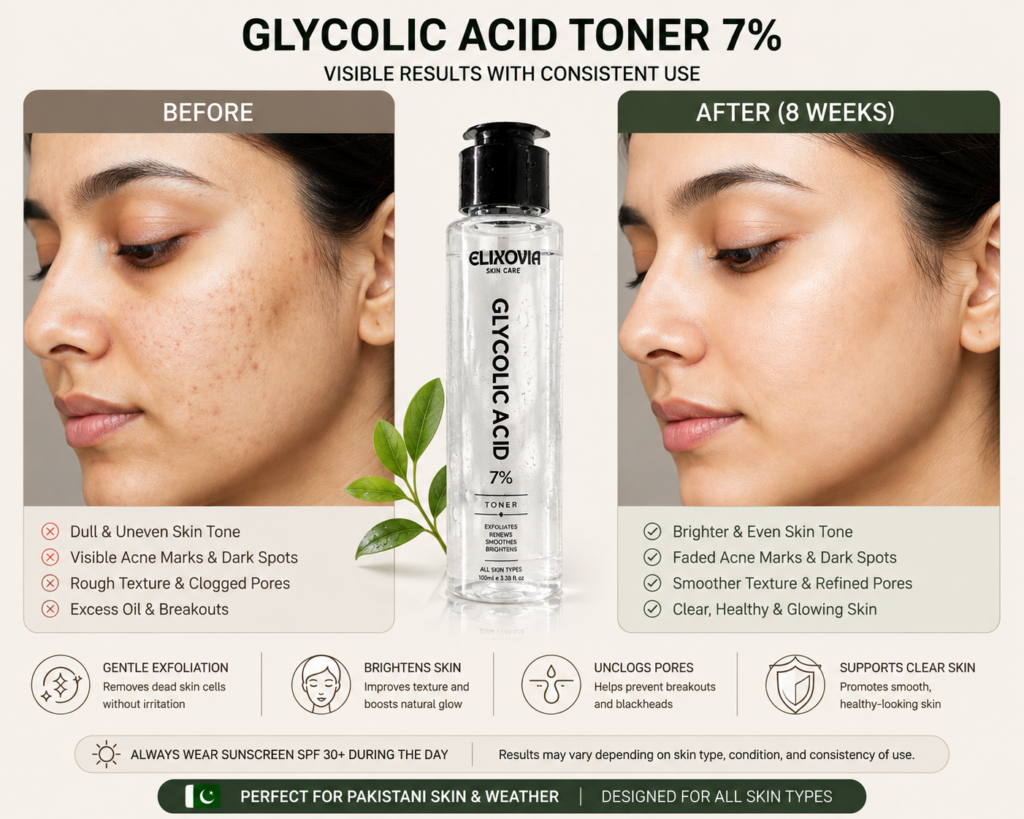
If you’re looking for a beginner-friendly option to put these tips into practice, Elixovia Glycolic Acid 7% Toner is designed for regular at-home use.
Why Choose Elixovia Glycolic Acid 7% Toner?
✔ Helps exfoliate dead skin cells
✔ Supports smoother-looking skin
✔ Helps improve the appearance of dullness and uneven texture
✔ Suitable for most skin types when introduced gradually
✔ Easy to incorporate into an evening skincare routine
👉 Explore Elixovia Glycolic Acid 7% Toner
Introduction
Healthy, glowing skin doesn’t happen overnight—it starts with choosing the right skincare ingredients and using them correctly. Among the many exfoliating ingredients available today, glycolic acid has become one of the most trusted options for improving dull skin, uneven texture, post-acne marks, and signs of sun damage. Whether you’re just starting your skincare journey or looking to upgrade your routine, understanding how glycolic acid works can help you achieve smoother, brighter-looking skin safely.
Glycolic acid belongs to the alpha hydroxy acid (AHA) family and is widely used in toners, serums, masks, and professional treatments. Because it has one of the smallest molecular sizes among AHAs, it can exfoliate the skin’s surface effectively by loosening the bonds between dead skin cells. This process encourages fresh, healthy skin to appear, helping improve overall skin texture and radiance.
In Pakistan, glycolic acid has become increasingly popular due to common skincare concerns such as uneven skin tone, acne marks, dullness caused by pollution, and sun exposure. However, many people still have questions: How often should I use it? Can I combine it with Vitamin C or Niacinamide? Is it suitable for sensitive skin? What results should I expect?
This comprehensive guide answers these questions with practical, science-based advice. You’ll learn the benefits of glycolic acid toner, how to build a beginner-friendly routine, common mistakes to avoid, and how to use it confidently as part of your daily skincare regimen.
Whether you’re aiming to refresh tired-looking skin, support a more even complexion, or simply understand if glycolic acid is right for you, this guide will help you make informed decisions and get the most from your skincare routine.
What Is Glycolic Acid Toner?
Glycolic Acid Toner is a liquid skincare product formulated with glycolic acid, a type of Alpha Hydroxy Acid (AHA) naturally derived from sugar cane. It is designed to gently exfoliate the surface of your skin by removing dead skin cells that can make your complexion look dull, uneven, or rough.
Unlike facial scrubs that use physical particles to exfoliate, glycolic acid works through a chemical exfoliation process. It loosens the bonds that hold dead skin cells together, allowing them to shed naturally without the need for harsh rubbing. This helps reveal newer, smoother, and healthier-looking skin underneath.
One of the reasons glycolic acid is so effective is its small molecular size. Among all AHAs, glycolic acid has the smallest molecules, allowing it to penetrate the skin’s surface more efficiently. When used correctly, it can improve skin texture, brighten the complexion, reduce the appearance of acne marks, and promote a more even skin tone.
A 7% glycolic acid toner is commonly recommended for home use because it provides effective exfoliation while remaining suitable for most beginners when introduced gradually. It can be incorporated into an evening skincare routine and used consistently to support smoother, more radiant skin.
How Does Glycolic Acid Work?
Your skin naturally renews itself approximately every 28 to 40 days, although this process often slows with age, sun exposure, pollution, and environmental stress. When dead skin cells remain on the surface for too long, they can contribute to a dull complexion, clogged pores, uneven texture, and the appearance of dark spots.
Glycolic acid helps speed up this natural renewal process.
Instead of scrubbing away dead skin cells manually, glycolic acid gently dissolves the “glue” that holds them together. As these old cells shed, fresh skin cells become visible, giving the skin a smoother, brighter, and more even appearance.
Regular use may also support the skin’s natural renewal process, which can gradually improve the look of fine lines, rough patches, and post-acne marks over time.
Think of It Like This
Imagine your skin is like a window covered in dust.
No matter how bright the sunlight is outside, the window will appear cloudy until it’s cleaned. Glycolic acid acts like a gentle window cleaner for your skin, helping remove the layer of dead skin cells so your natural radiance can show through.
Chemical Exfoliation vs Physical Scrubs
Many people in Pakistan still rely on walnut scrubs, apricot scrubs, or harsh exfoliating brushes to remove dead skin. While these products may leave the skin feeling smooth temporarily, frequent or aggressive scrubbing can cause tiny surface injuries and irritation, especially for sensitive or acne-prone skin.
Here’s how the two approaches compare:
| Glycolic Acid (Chemical Exfoliation) | Physical Scrubs |
|---|---|
| Gently dissolves dead skin cells | Physically rubs them away |
| Helps improve skin tone and texture | Mainly removes surface flakes |
| More even exfoliation | Can exfoliate unevenly |
| No rough particles | May be abrasive on sensitive skin |
| Suitable when used correctly | Can worsen irritation if overused |
This doesn’t mean physical scrubs are always bad, but many skincare professionals recommend chemical exfoliants like glycolic acid because they provide more consistent exfoliation with less friction.
Who Should Use Glycolic Acid Toner?
A glycolic acid toner may be a good addition to your skincare routine if you want to improve the appearance of:
- Dull or tired-looking skin
- Uneven skin tone
- Post-acne marks
- Mild hyperpigmentation
- Rough or bumpy skin texture
- Enlarged-looking pores
- Fine surface lines
- Congested skin caused by dead skin buildup
It is suitable for many skin types, including normal, combination, and oily skin. People with dry skin can also use glycolic acid, provided they follow with a good moisturizer to help maintain hydration.
Who Should Be Cautious?
Although glycolic acid is beneficial for many people, it isn’t appropriate for every situation.
You should introduce it carefully or seek advice from a dermatologist if you:
- Have very sensitive skin
- Have eczema or rosacea
- Have open wounds or sunburn
- Recently had professional chemical peels or laser treatments
- Experience persistent irritation with exfoliating products
A simple patch test before full application can help reduce the risk of unexpected irritation.
Why Has Glycolic Acid Become So Popular in Pakistan?
Pakistan’s climate presents unique skincare challenges. High temperatures, humidity in many regions, air pollution, dust, and strong UV exposure can contribute to excess oil, clogged pores, uneven skin tone, and post-inflammatory marks from acne.
Because glycolic acid helps remove accumulated dead skin cells and supports a brighter-looking complexion, it has become a popular ingredient for people seeking a more even skin tone and smoother texture. However, due to Pakistan’s intense sunlight, daily sunscreen is essential when using glycolic acid to help protect newly exfoliated skin.
Science-Backed Benefits of Glycolic Acid Toner
Glycolic acid toner has become one of the most popular skincare products for people looking to achieve smoother, brighter, and healthier-looking skin. As the smallest Alpha Hydroxy Acid (AHA), glycolic acid penetrates the skin’s surface efficiently to loosen and remove dead skin cells. This gentle exfoliation supports the skin’s natural renewal process and can improve several common skin concerns over time.
While results vary depending on skin type, product formulation, and consistency, regular use of a glycolic acid toner can noticeably improve your complexion when incorporated into a balanced skincare routine.
Let’s explore the key benefits and understand why dermatologists and skincare professionals frequently recommend glycolic acid as part of an effective exfoliation routine.
1. Gently Removes Dead Skin Cells
Your skin naturally sheds dead cells every day, but this process slows down due to aging, sun exposure, pollution, and environmental stress. When dead skin cells accumulate, they can leave your complexion looking dull, rough, and uneven.
Glycolic acid helps loosen the bonds between these dead skin cells, allowing them to shed naturally without harsh scrubbing. As newer skin cells appear on the surface, your skin feels softer and looks noticeably fresher.
Unlike physical scrubs that rely on abrasive particles, glycolic acid provides a more even exfoliation across the skin.
2. Brightens Dull and Tired-Looking Skin
One of the first improvements many users notice is healthier-looking, more radiant skin.
By removing the layer of dead skin cells that can make the complexion appear lifeless, glycolic acid helps reveal fresher skin underneath. Over several weeks of consistent use, the skin often appears brighter, smoother, and more even.
If your skin frequently looks tired despite cleansing and moisturizing, gentle chemical exfoliation may help restore its natural glow.
3. Helps Improve the Appearance of Acne Marks
Many people confuse acne marks with acne scars.
Dark marks left behind after breakouts—known as post-inflammatory hyperpigmentation (PIH)—can take months to fade naturally.
By supporting regular skin renewal, glycolic acid can gradually improve the appearance of these marks, helping your complexion look clearer over time. Deep or raised acne scars usually require professional treatments, but glycolic acid can be a helpful part of a routine aimed at improving overall skin tone.
4. Promotes a More Even Skin Tone
Uneven skin tone is a common concern in Pakistan due to frequent sun exposure, pollution, and post-acne discoloration.
Regular exfoliation helps remove older pigmented skin cells, allowing newer skin cells to become visible. Combined with daily sunscreen, glycolic acid can support a brighter and more balanced-looking complexion over time.
5. Smooths Rough Skin Texture
If your skin feels rough when you touch it or makeup doesn’t apply evenly, accumulated dead skin cells may be part of the problem.
Glycolic acid refines the skin’s surface by encouraging regular exfoliation, helping improve texture and creating a softer feel. With consistent use, many people notice that their skincare products also spread more evenly.
6. Improves the Appearance of Pores
No skincare ingredient can permanently shrink pore size, as pore size is largely determined by genetics. However, pores can appear larger when they become clogged with oil, dirt, and dead skin cells.
By helping keep the skin surface clear, glycolic acid can make pores appear cleaner and less noticeable, contributing to a smoother overall appearance.
7. Supports Better Absorption of Skincare Products
Dead skin cells can create a barrier that makes it more difficult for moisturizers and serums to spread evenly across the skin.
Once that buildup is gently removed, products applied afterward may distribute more effectively across the skin’s surface.
For this reason, many evening skincare routines include a glycolic acid toner before hydrating products.
For example, after cleansing, a product such as Elixovia Glycolic Acid 7% Toner can be used before applying your moisturizer, allowing the routine to progress from exfoliation to hydration.
8. Helps Maintain a Healthy-Looking Glow
Healthy-looking skin reflects light more evenly.
By continuously encouraging the removal of old skin cells, glycolic acid helps reveal fresher skin that often appears naturally radiant instead of dull or tired.
This is one of the reasons glycolic acid has become a favorite ingredient in skincare routines focused on improving overall skin appearance rather than addressing just one concern.
9. Supports the Skin’s Natural Renewal Process
Your skin naturally renews itself, but factors such as age and environmental stress can slow this process.
Glycolic acid encourages the shedding of old surface cells, helping maintain smoother-looking skin and supporting your skin’s ongoing renewal cycle.
When combined with hydration and daily sun protection, it can become an important part of a long-term skincare routine.
Suitable for Many Skin Types When Introduced Gradually
When used correctly, glycolic acid can be incorporated into routines for oily, combination, normal, and even some dry skin types.
The key is not choosing the strongest product available, but introducing it slowly and paying attention to how your skin responds.
A well-formulated 7% glycolic acid toner, such as Elixovia Glycolic Acid 7% Toner, provides a balanced concentration that many beginners can introduce gradually into their evening skincare routine while following with a moisturizer and sunscreen the next day.
Beginner’s Guide to Using Glycolic Acid Toner
Starting a new active ingredient can feel intimidating, especially if you’ve never used a chemical exfoliant before. The good news is that glycolic acid is easy to incorporate into your routine when introduced gradually.
Following a few simple steps can help you enjoy its benefits while minimizing the risk of irritation.
Step 1: Perform a Patch Test
Before applying glycolic acid to your entire face, perform a patch test on a small area such as behind your ear or along your jawline.
Wait 24 hours to check for any signs of excessive redness, swelling, or discomfort. If your skin responds well, you can begin using it as part of your facial routine.
Step 2: Start Slowly
One of the biggest mistakes beginners make is using glycolic acid every night from the very beginning.
Instead:
- Use it 1–2 nights per week for the first two weeks.
- Observe how your skin responds.
- Increase frequency gradually only if your skin remains comfortable.
Consistency is more important than using it as often as possible.
Step 3: Apply It at Night
Most people find that evening is the best time to use glycolic acid because it allows the skin to exfoliate overnight while reducing immediate exposure to sunlight.
After cleansing, apply your glycolic acid toner to clean, completely dry skin.
For those using Elixovia Glycolic Acid 7% Toner, apply a small amount with a cotton pad or clean hands, avoiding the eye area and lips. Allow it to absorb before moving to the next step in your routine.
Step 4: Follow with a Moisturizer
Exfoliation can temporarily leave the skin feeling dry.
Applying a gentle moisturizer after glycolic acid helps replenish hydration, supports the skin barrier, and makes your routine more comfortable.
Step 5: Never Skip Sunscreen
If there is one rule you should never ignore, it’s this:
Always wear sunscreen.
Because glycolic acid removes dead surface cells, newly exposed skin may be more sensitive to UV rays.
Use a broad-spectrum sunscreen with at least SPF 30 every morning, even on cloudy days. This simple habit helps protect your skin and supports the results of your exfoliation routine.
How Often Should You Use Glycolic Acid Toner?
One of the most frequently asked questions is:
“Can I use glycolic acid toner every day?”
The answer depends on your skin type, the concentration of the product, and how well your skin tolerates exfoliation.
If You’re a Beginner
Start with one or two evenings per week. This gives your skin time to adapt while reducing the likelihood of irritation.
Once Your Skin Adjusts
Many people find that using glycolic acid 2–3 nights per week provides a good balance between effectiveness and comfort.
Can You Use It Every Day?
Some experienced users may tolerate daily use, but it isn’t necessary for everyone. Using glycolic acid too often can lead to dryness, irritation, and a weakened skin barrier.
Pay attention to your skin. If you notice persistent redness, peeling, or sensitivity, reduce the frequency and focus on hydration until your skin feels comfortable again.
Morning or Night: When Should You Apply Glycolic Acid?
Although glycolic acid can technically be used at different times of the day, night-time application is generally recommended.
During the evening, your skin naturally enters its repair cycle, making it a convenient time to incorporate exfoliating products into your routine. Applying glycolic acid at night also reduces the chance of immediate sun exposure after exfoliation.
A Simple Evening Routine
- Cleanse your face with a gentle cleanser.
- Apply your glycolic acid toner to clean, dry skin.
- Wait about one minute for it to absorb.
- Finish with a nourishing moisturizer.
If you’re using Elixovia Glycolic Acid 7% Toner, this simple three-step evening routine makes it easy to introduce glycolic acid into your skincare regimen without adding unnecessary complexity.
The following morning, cleanse your skin, moisturize if needed, and apply a broad-spectrum sunscreen with SPF 30 or higher before heading outdoors.
Pro Tip: Healthy, glowing skin comes from consistency—not overuse. A well-planned routine followed regularly will almost always deliver better results than using strong products too frequently.
Signs That Glycolic Acid Is Working
Many first-time users wonder whether their toner is making a difference. While everyone’s skin responds differently, there are several positive signs that indicate your routine is on the right track.
During the first few weeks, you may notice:
- Skin feels softer after cleansing.
- Makeup applies more smoothly.
- Dullness gradually fades.
- Skin appears brighter and more refreshed.
- Rough patches become less noticeable.
After consistent use over several weeks, many people observe:
- A more even-looking complexion.
- Gradual improvement in the appearance of post-acne marks.
- Smoother skin texture.
- Cleaner-looking pores.
- Healthier-looking glow.
Remember that skincare is a long-term commitment. Consistency, combined with moisturizing and daily sunscreen, is far more important than expecting overnight results.
⭐ How to Layer Glycolic Acid with Other Skincare Products
Knowing the correct order of application helps you get the most out of your skincare routine.
Evening Routine
- Gentle Cleanser
- Elixovia Glycolic Acid 7% Toner
- Optional: If your skin is already comfortable with glycolic acid and the combination works well for you, apply Elixovia Niacinamide Plus Serum to help support the skin barrier, improve the appearance of post-acne marks, and balance excess oil.
- Finish with a moisturizer.
This order allows glycolic acid to exfoliate clean skin before hydrating and moisturizing products are applied.
If you’re using multiple active ingredients, avoid introducing them all at once. Add one new product at a time so you can monitor how your skin responds.
⭐ How Long Does It Take to See Results?
This is one of the most searched questions about glycolic acid.
Although results vary depending on skin type, skincare routine, and consistency, here’s a general timeline:
First Week
- Skin may feel smoother.
- Surface dryness may improve with regular moisturizing.
Weeks 2–4
- Complexion may appear brighter.
- Skin texture often feels more refined.
- Makeup may apply more evenly.
Weeks 6–8
- Some users notice improvement in the appearance of post-acne marks.
- Skin tone may appear more even.
- Overall skin looks healthier and more radiant.
Visible improvements take time, so avoid switching products too quickly if your skin is tolerating the routine well.
⭐ What Skin Types Benefit Most?
Oily Skin
Glycolic acid can help remove dead skin cells that contribute to clogged pores and a dull complexion. It works well when combined with a lightweight moisturizer and sunscreen.
Combination Skin
Many people with combination skin benefit from glycolic acid because it exfoliates evenly without the need for harsh scrubbing.
Dry Skin
Dry skin can also benefit, provided glycolic acid is introduced gradually and followed with a nourishing moisturizer to support hydration.
Mature Skin
As skin renewal naturally slows with age, glycolic acid may help improve the appearance of rough texture and contribute to a smoother-looking complexion.
⭐ Why Consistency Matters More Than Strength
One of the biggest misconceptions in skincare is that stronger products always produce faster results.
In reality, using a well-formulated product consistently is usually more effective than using a higher concentration too frequently.
For many people, a 7% glycolic acid toner, such as Elixovia Glycolic Acid 7% Toner, offers a balanced approach that fits comfortably into a long-term skincare routine when used as directed.
Slow, consistent progress is generally healthier for the skin than aggressive exfoliation.
⭐ Pro Tips for Better Results
- Apply glycolic acid only to clean, dry skin.
- Wait about one minute before applying moisturizer.
- Use lukewarm water instead of hot water when cleansing.
- Avoid picking at acne or peeling skin.
- Wash pillowcases regularly.
- Stay hydrated throughout the day.
- Wear sunscreen every morning.
- Be patient and follow a consistent routine.
Bài viết rất hữu ích, cảm ơn đã chia sẻ! Letco là công ty tư vấn du học Hàn Quốc uy tín, hỗ trợ trọn gói từ hồ sơ, visa đến học bổng. Tham khảo thêm tại letco.vn nhé.